








Static-Safe Packaging Built To Your Spec.
Sensitive electronics get damaged before they ever reach the test bench when packaging isn’t engineered for ESD protection. A single discharge event can degrade a flex circuit, kill a sensor, or render an integrated circuit useless without leaving a visible trace.
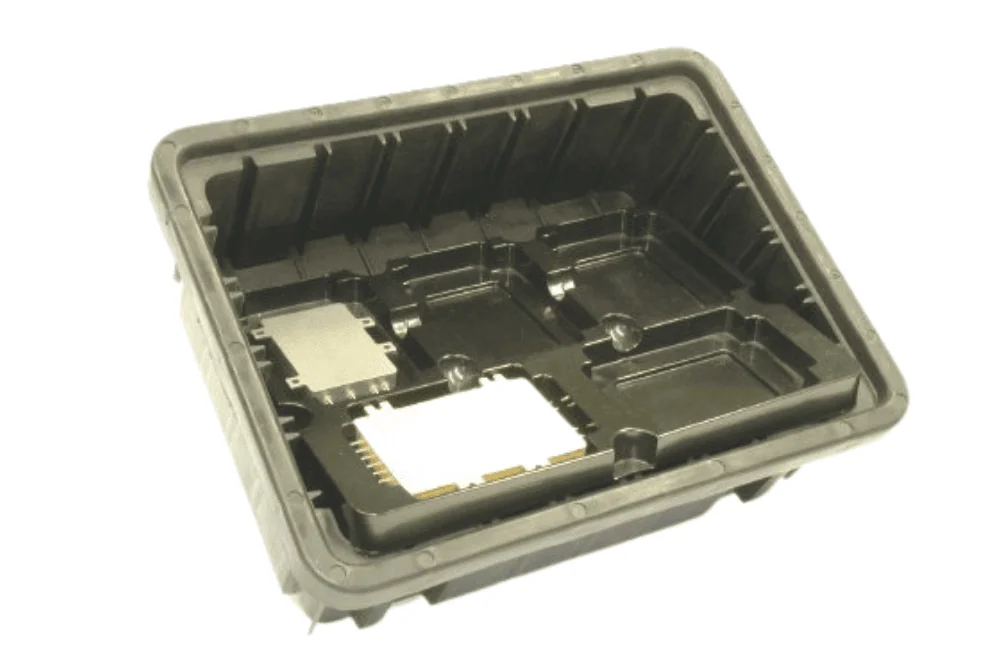
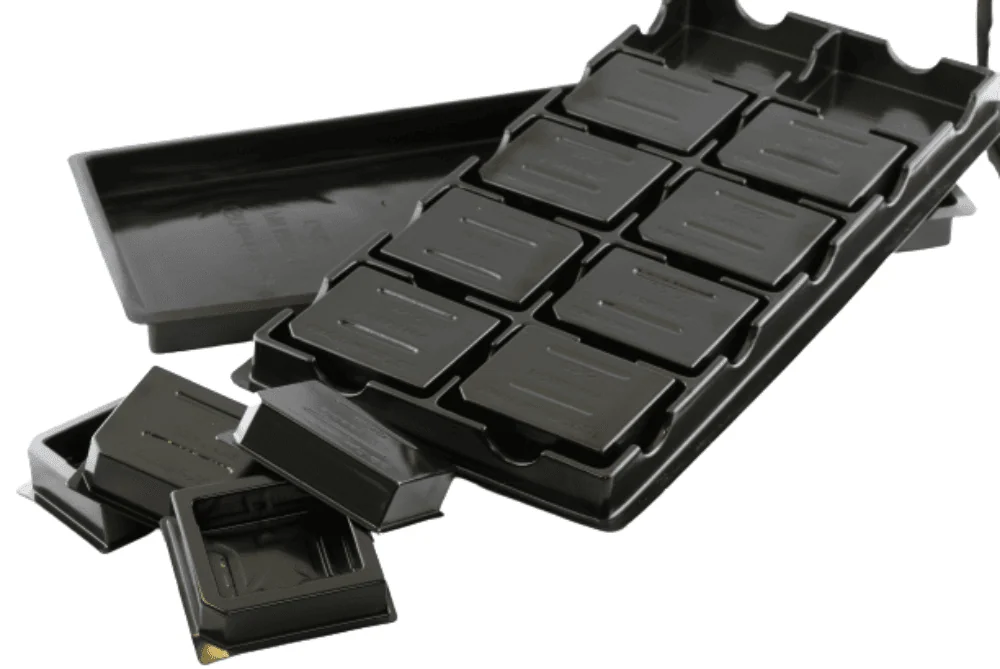
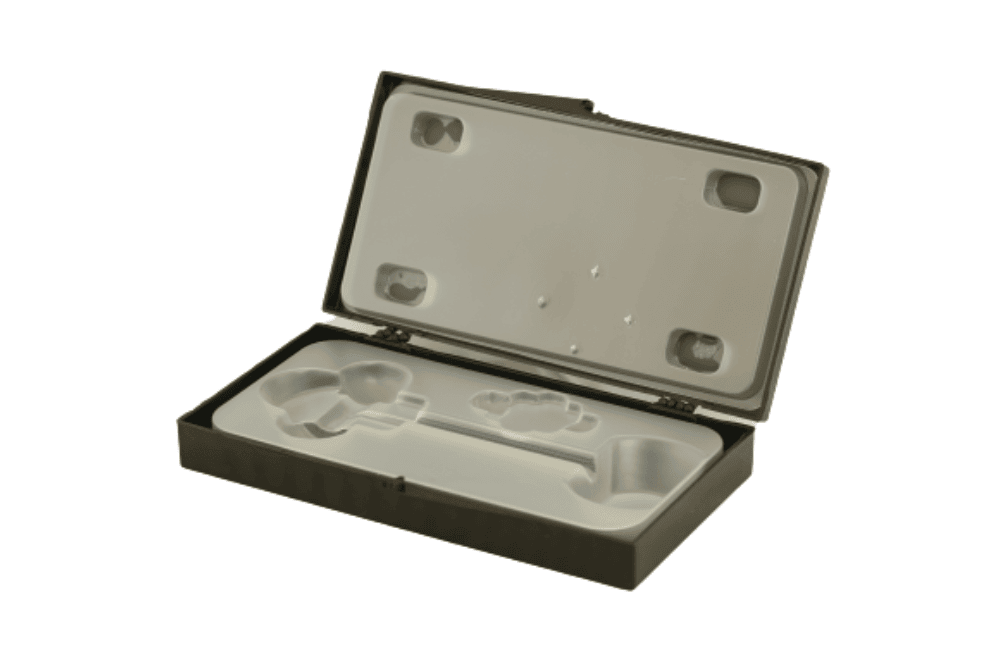
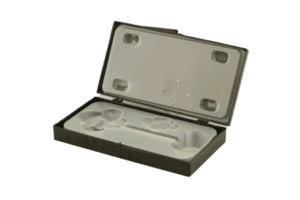
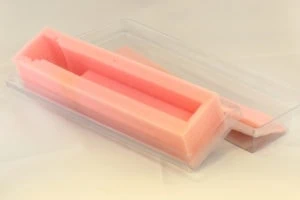
Kiva Container has been building custom ESD packaging since the 1990s. We design and fabricate static-dissipative and conductive trays, bins, boxes, and integrated systems from a single facility in Anaheim, CA. Conductive thermoformed inserts that match your component geometry, dropped into static-shielding corrugated containers built to your shipping or storage spec.
Custom ESD-safe packaging for electronics, aerospace, medical devices, and automated material handling, engineered to your specs.
Materials We Run
We stock and run the full range of ESD materials, with no minimums or material substitutions when a project calls for a specific grade.
Conductive Thermoformable Polymers
Gauge range 0.020 to 0.060 inch. The workhorse material for ESD trays, clamshells, and component carriers. Surface resistivity in the conductive range (typically 10^3 to 10^5 ohms per square). Thermoforms cleanly on our inline and sheet-fed machines, with tight tolerances against your part geometry.
Static-Dissipative Clear PVC
Gauge range 0.015 to 0.035 inch. Used when component visibility matters at the inspection or pick stage. Surface resistivity in the static-dissipative range (10^6 to 10^9 ohms per square). Forms cleanly into clamshells, blisters, and lidded trays.
Conductive Corrugated Plastic
Available in 3mm and 4mm gauges. Used for boxes, bins, totes, dividers, and dunnage where structural integrity and ESD protection both matter. Die-cut on our flatbed press for clean, repeatable production.
Conductive Paper Corrugated
200lb B-flute and 200lb E-flute double wall. The right material when an ESD-safe outer container needs the look, feel, and recyclability of paper corrugated rather than plastic. Common for medical and lab device shipments.
ESD-Safe Medical Acrylics
Specialty acrylics that combine ESD protection with the chemical compatibility required for medical device packaging. Used for custom trays and shipping inserts where the device is both static-sensitive and sterilization-bound.
Specifications
-
Applications
- Ultra high density interconnect (UHDI) flex circuits
- Ceramic-To-Metal-Seal (CTMS), Glass-To-Metal-Seal (GTMS) hermetic packages.
- High-Temperature Cofired Ceramic (HTCC) hermetic packages.
- Integrated circuits, Circuit Card Assemblies.
- Custom manufactured Semiconductors
- Electro-Mechanical hermetically sealed relays
- PCB Boards
- Custom & Standard photodiodes
- Custom LED’s
- Fiber-optic Cabling & Connection Components
- Opto-electronic sensors
-
Materials
- Conductive thermo-formable polymers .02-06
- Static dissipative clear PVC .015-.035
- Conductive plastic corrugated 3mm and 4mm
- Conductive paper corrugated 200lb B flute double wall
- Conductive paper corrugated 200lb E flute double wall
- Specialized ESD packaging medical acrylics (safe for medical devices that require proper ESD protective packaging)
ESD Packaging Applications
Electrostatic discharge (ESD) protective packaging provides an integral layer of protection when shipping or storing sensitive electronic devices. This packaging usually takes the form of ESD rigid packaging boxes, but they can be tailored to meet specific needs. Kiva Container creates ESD packaging for these common applications:
- High-temperature cofired ceramic (HTCC) hermetic packages
- Ceramic-to-metal-seal (CTMS) and glass-to-metal-seal (GTMS) hermetic packages
- Ultra high density interconnect (UHDI) flex circuits
- Integrated circuits and circuit card assemblies
- Custom manufactured semiconductors
- PCB boards
- Fiber-optic cabling and connection components
- Optoelectronic sensors
- Electromechanical hermetically sealed relays
- Custom LEDs
- Custom and standard photodiodes
How We Build ESD Packaging
Two main process paths, often combined in a single integrated package.
| Process | Best For | Materials |
| Thermoforming | Component-specific trays, clamshells, and inserts. Tight tolerances against part geometry. | Conductive polymers, static-dissipative PVC, ESD acrylics |
| Corrugated Fabrication | Boxes, bins, totes, dividers, and large-format dunnage for shipping or storage | Conductive plastic corrugated, conductive paper corrugated |
| Integrated Systems | Thermoformed conductive insert dropped into a corrugated conductive container. Best of both processes. | Any combination of the above |
All ESD packaging is fabricated in-house at our Anaheim facility. Tooling is built in-house on our CNC mills. No outsourcing. No middlemen.
Industries We Serve
Our ESD packaging is in use across industries where component damage from static is a real cost, not a theoretical concern.
- Electronics manufacturing. Custom trays for PCBs, integrated circuits, semiconductors, photodiodes, LEDs, fiber optic components, and opto-electronic sensors.
- AS9100D-certified ESD trays and shipping containers for avionics components, mission electronics, and assembly-line kitting.
- Medical devices. ESD-safe packaging for sensor-integrated devices, surgical electronics, and diagnostic instruments. Material options compatible with sterile processing requirements.
- Automotive electronics. ESD trays and dunnage for sensor modules, control units, and infotainment electronics moving through tier-1 and tier-2 supplier chains.
- Defense and government. Custom ESD packaging for classified and controlled-distribution electronics, with documentation and material traceability under our AS9100D quality system.
- Automated material handling and ASRS. ESD-safe totes, trays, and dunnage sized for VLM and goods-to-person automation systems.
Why Kiva Container for ESD
- ESD work since the 1990s. We were running conductive materials before the current alphabet of certifications existed.
- Both thermoforming and corrugated fabrication under one roof. Most ESD vendors specialize in one process. We integrate both into a single package.
- In-house design, tooling, and production. Aluminum CNC-machined thermoforming tools and steel rule dies, all built on our own equipment.
- Full ESD material stock with no minimums. Conductive thermoformables, static-dissipative PVC, conductive plastic corrugated in 3mm and 4mm, conductive paper corrugated, ESD acrylics.
- AS9100D and ISO 9001:2015 certified. Documentation, traceability, and audit support are built into our quality system.
- ANSI/ESD S541 compliance baked into our packaging design recommendations.
- Woman-owned California small business. Founded 1986. Single Anaheim facility. Owner-involved on every project.
Ready to Get Started?
Tell us about the component you need to protect, the shipping or storage environment, and any ANSI/ESD or AS9100D requirements. We will recommend the right material, gauge, and configuration.
Request a Quote | Contact Us | 714-630-3850